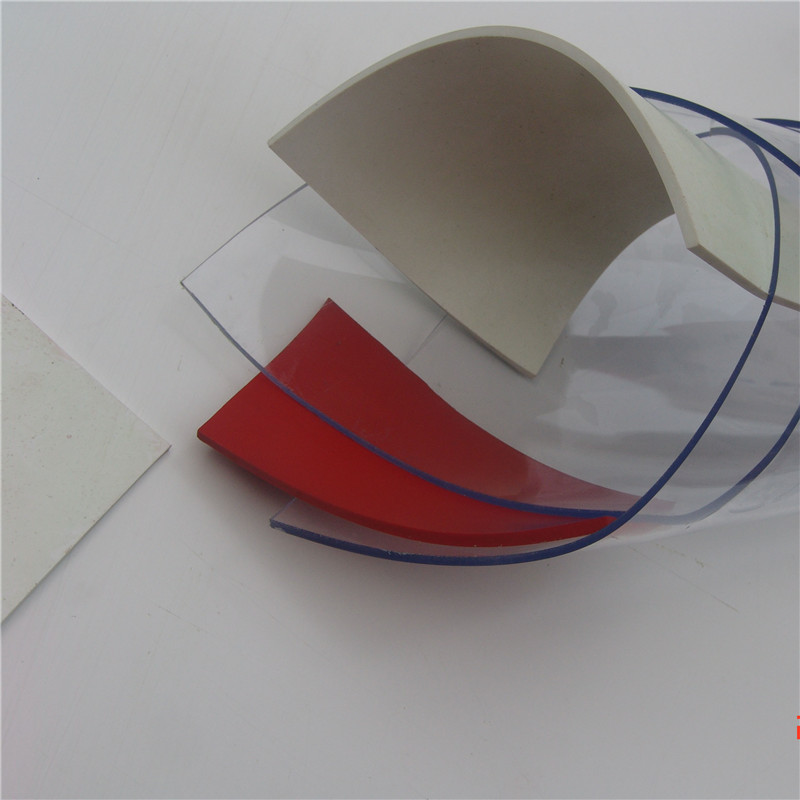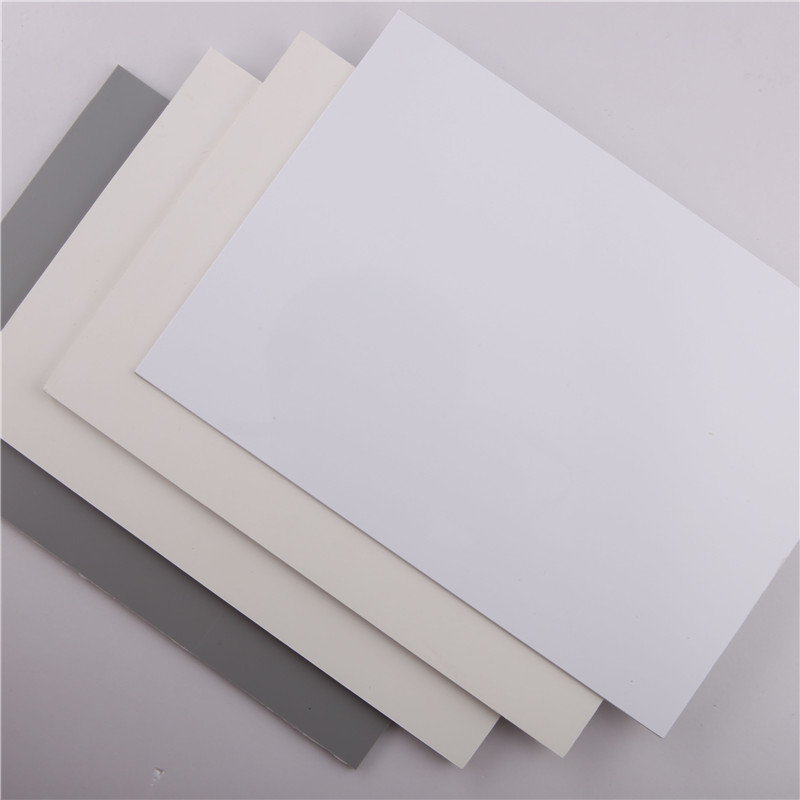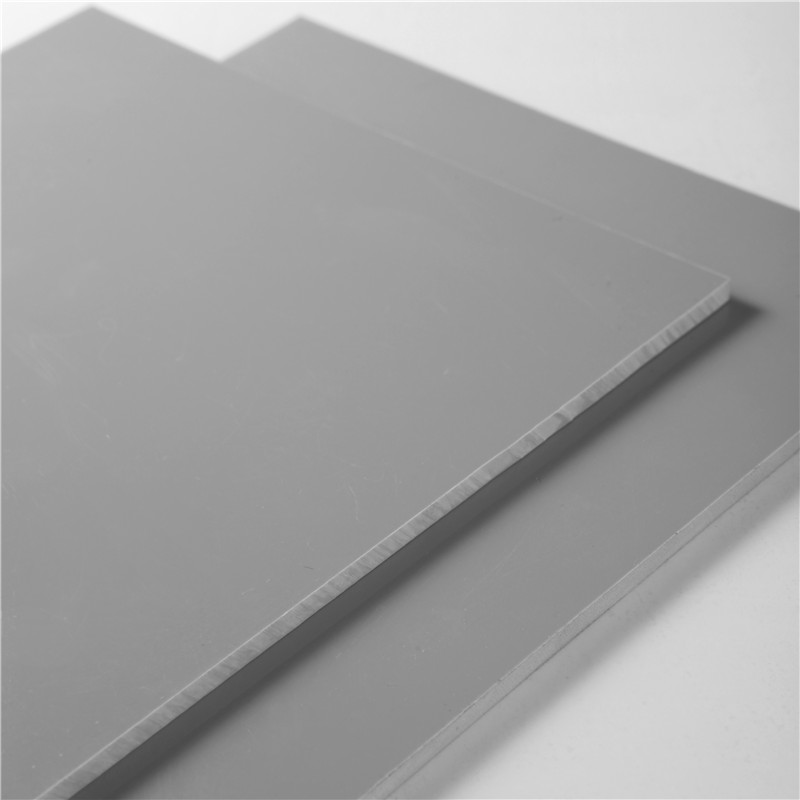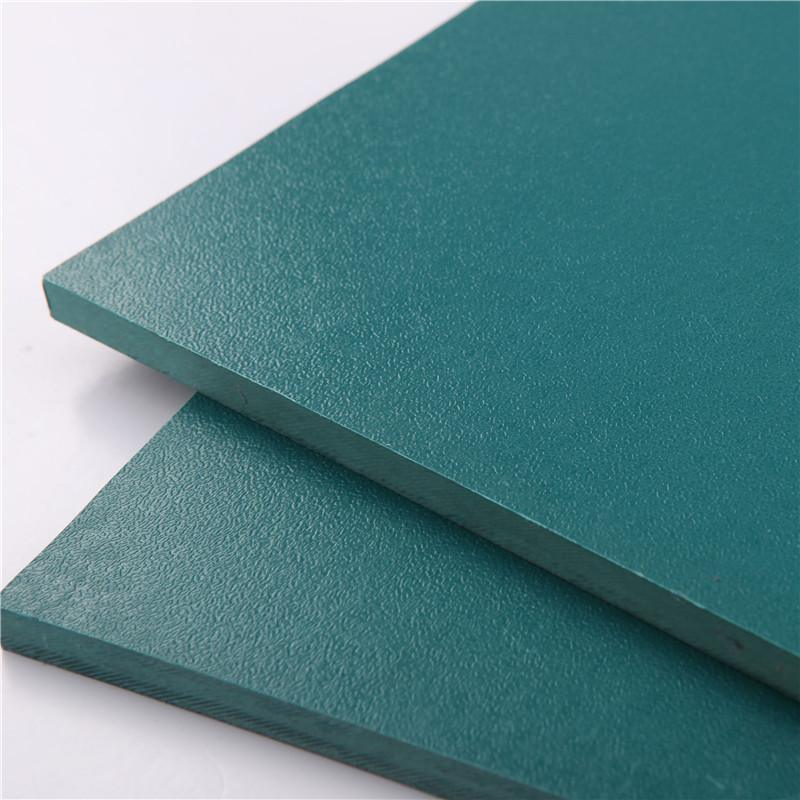
Available in thickness from 3 mm to 15 mm and width from 1 mm to 3 mm (1000–1300 mm) or 4 mm to 15 mm (1000–1500 mm), with any length. The product is made in embossed surface finish and comes in standard colors including dark grey (RAL7011), light grey, black, white, blue, green, red, and other customer-specified colors.
Product introduction
Natural-color polyvinyl chloride (PVC) is yellow translucent and glossy. Its transparency is better than polyethylene (PE) and polypropylene (PP), but poorer than polystyrene (PS). Depending on the type and dosage of additives, PVC is classified into soft and rigid grades. Soft PVC products are flexible and somewhat tacky, while rigid PVC products have a higher hardness than low-density polyethylene (LDPE).
PVC rigid sheet refers to PVC processed through extrusion from rigid-grade material.
Production process
PVC board is a plastic made of polyvinyl chloride (PVC), produced by free-radical polymerization of vinyl chloride monomer (English name: Polyvinyl chloride; commonly abbreviated as PVC). PVC board is blended with a PVC stabilizer, lubricant, and filler. After mixing, it is extruded using an extruder into rigid sheets of various thicknesses.
Rigid PVC embossed sheets offer excellent corrosion resistance, electrical insulation, and a certain level of mechanical strength. After secondary processing, they can be formed into chemical tanks (including sulfuric acid and hydrochloric acid tank/bucket box applications). They are also suitable for fabrication of molds, decorative boards, exhaust ducts, equipment lining, and other special-shaped products and containers. As a result, PVC rigid sheets are an ideal material for the chemical industry, construction, decoration, and other related sectors.
Applications
PVC rigid sheets with embossed surfaces are widely used in both interior and exterior construction, as well as in general and chemical industries. Typical applications include advertising signboards, wall cladding for offices and public facilities, door panels, laboratory equipment, etching equipment, semiconductor processing equipment, water tanks, chemical storage tanks, oil tanks, brewing-water storage tanks, acid/alkali production towers, acid/alkali washing towers, and photographic developing instruments. In the electrical industry, they are used for battery boxes, electrometer plates, electrolytic tanks, and various insulating plates, among other uses.